The PC-98 look: why old visual novels still feel so warm
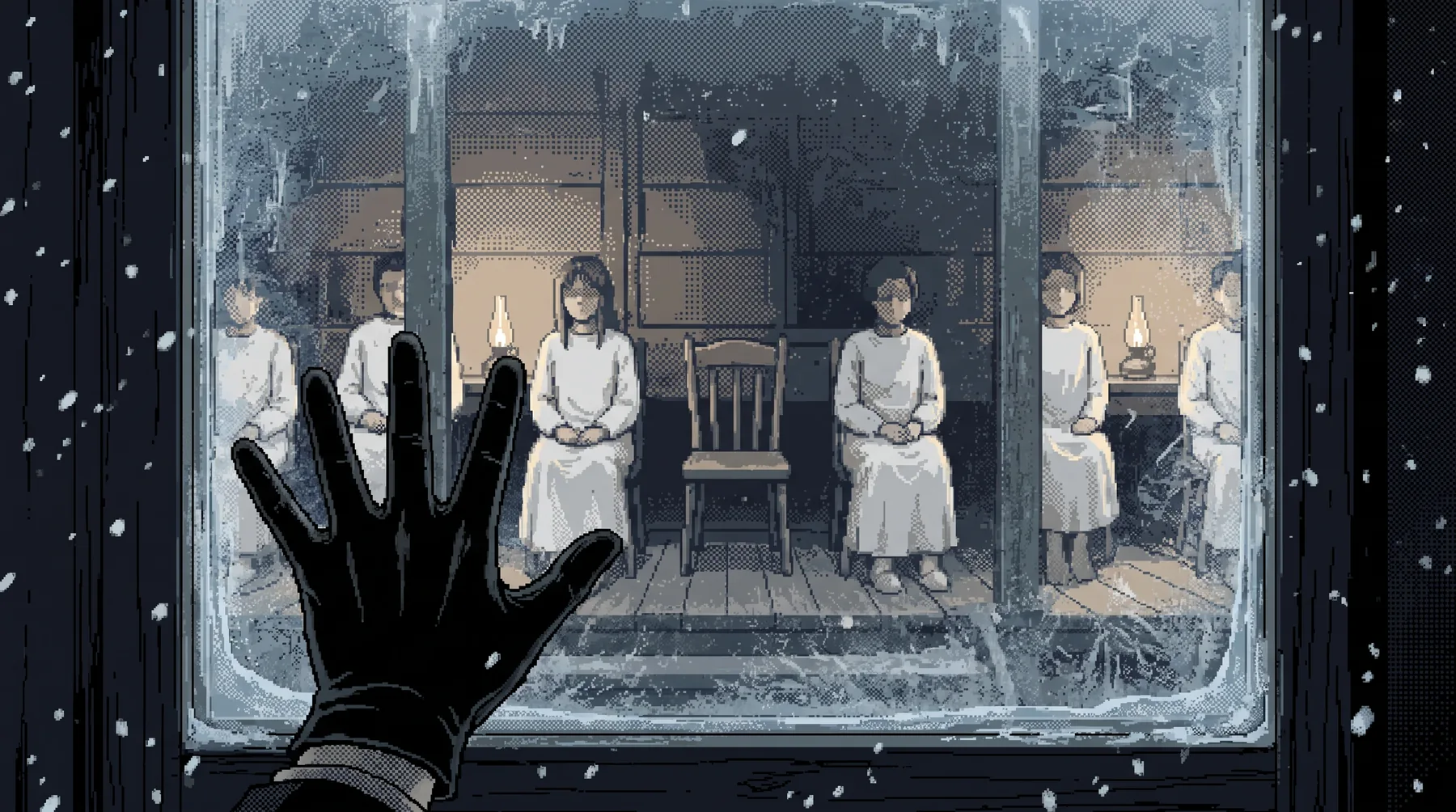
The PC-98 look is the visual style of Japanese computer games from the 1980s and 1990s, made for NEC's PC-98 computers. A standard machine showed 640 × 400 pixels in 16 colors out of a palette of 4,096, so artists used dithering, patterns of colored pixels, to suggest shades they could not display. New games such as VA-11 Hall-A and Stories from Sol: The Gun-Dog still draw on it.
What was the PC-98?
The PC-98 was NEC's line of Japanese personal computers. The first model, the PC-9801, launched in October 1982. By 1991 the line held over 60% of the Japanese PC market. NEC moved away from compatibility in 1997, and about 18.3 million units had shipped when shipments ended in 2004.
The machine mattered to visual novels because of what it could not do. It had no hardware sprites, which made fast action games hard, so a large part of its library was slow and picture-led. Adventure games and early visual novels flourished there, including Dōkyūsei and YU-NO.
The limits that made the style
| Limit | What artists did about it |
|---|---|
| 16 colors on screen, from a palette of 4,096 | Chose a small, careful palette for each image |
| 640 × 400 pixels | Drew detailed still scenes, with pixels small enough for fine line work |
| No hardware sprites | Favored stills and text over motion |
| Too few colors for smooth shading | Used dithering to fake gradients, skin tones and soft light |
How dithering works
Dithering approximates colors that are not in the palette by spreading out pixels of the colors that are. Your eye blends them. A checkerboard of dark blue and orange, seen from a distance, becomes a color neither pixel has.
Good PC-98 art treated these patterns as a craft in their own right. Regular patterns give an image its woven, slightly textile surface. That texture is the first thing most people remember.
Why it feels so warm
This part is our opinion rather than history, and we made a game in this style, so weigh it accordingly. We think there are four reasons:
- Your eye finishes the picture. Dithered art is not fully resolved until you look at it, so you take part in making it.
- Few colors mean deliberate colors. With 16 to spend, an artist has to decide what a room feels like. Night scenes in indigo and lamp orange look lit, not rendered.
- Nothing is moving. A still image and a line of text set a reading pace, and the game waits for you like a book.
- It remembers a particular room. For players of a certain age it recalls a desk, a monitor and a late night. For younger players it has the appeal of an old photograph of somewhere they never went.
How to recognize the style
- Visible checkerboard or line patterns in shading and sky.
- A limited palette, often leaning to one or two dominant hues.
- A framed picture window above or beside a boxed text window.
- Still scenes that change by a cut or a slow wipe, with very little animation.
- Interface frames that feel like a piece of software rather than a game menu.
Where to find it today
Most original PC-98 visual novels were only released in Japanese and need old hardware or an emulator. YU-NO's remake is the easiest official way into that library's most famous game, but it replaces the old art. For the look itself, new games are the simpler route:
- VA-11 Hall-A (2016) draws most of its influences from PC-98 games.
- Stories from Sol: The Gun-Dog (2025) recreates late-1980s PC-9800 adventure games in detail.
- DISK-Y, from the developer of Saihate Station, is a short psychological visual novel in the same style.
- An itch.io collection of PC-98 inspired projects gathers small indie experiments, tools and assets.
Frequently asked questions
What does PC-98 mean?
PC-98 is the common name for NEC's PC-9800 series, Japanese personal computers first sold in 1982. They were the leading PC platform in Japan into the 1990s.
What resolution and colors did PC-98 games use?
A standard PC-98 showed 640 × 400 pixels with 16 colors out of a palette of 4,096. Early models had 8 colors.
Is VA-11 Hall-A a PC-98 game?
No. VA-11 Hall-A is a 2016 game for modern systems. Its look is inspired by PC-98 games, especially X-Girl: Cyber Punk Adventure.
Can I play original PC-98 visual novels in English?
Rarely in official form. Most were only released in Japanese. Modern remakes, such as YU-NO, and new games in the style are the easier options.